Best CRM tools for startups in 2026: three workflows compared

The best CRM for a startup depends on what its small team needs to remember and do next. A founder with a handful of conversations may need reliable contact history. A team losing track of active deals may need a visible pipeline. A company with unusual relationships between accounts, investors, partners and opportunities may need more flexible records. Those are different jobs, even though all three are called “CRM.”
This guide compares HubSpot, Pipedrive and Attio through those three jobs. It is a decision aid based on their public product pages, checked September 25, 2026, not a hands-on performance test or a universal ranking. Product plans and limits change, so confirm the current terms on each vendor's site before choosing. If you first need to decide whether a CRM belongs in your stack at all, read our sales tools for startups guide.
Choose the CRM job before the brand
Write down the last sales follow-up that went wrong. Did you forget who had spoken to the buyer? Did a deal sit in the wrong stage? Could nobody see the relationship between a company and its contacts? That failure is a better selection criterion than a feature-count chart.
Use one representative set of fictional or consented contacts in each trial. A polished demo with sample records does not prove the product fits your own process. Avoid putting real buyer information into a trial until you understand its access and data terms.
HubSpot
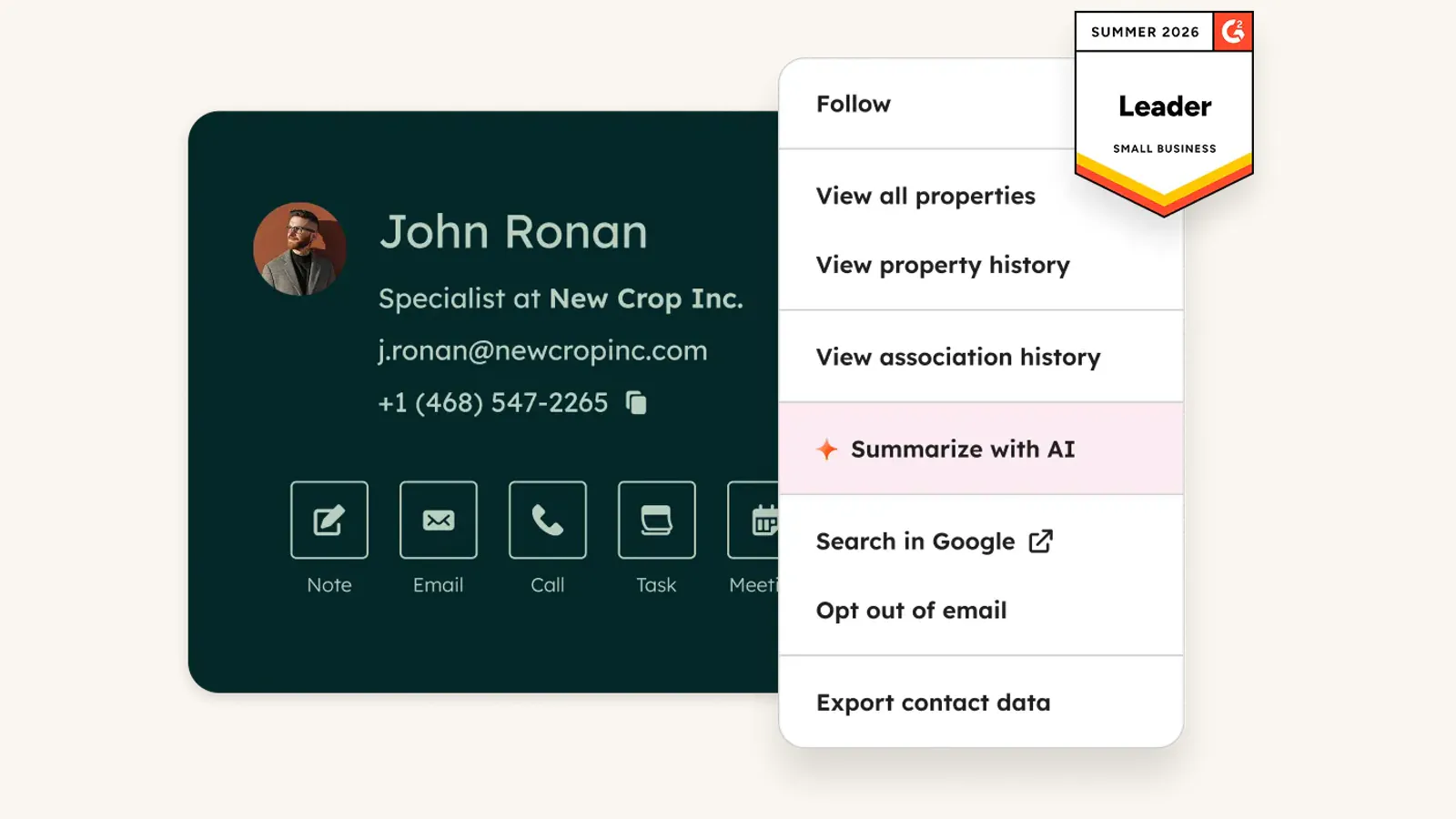
HubSpot's official CRM page presents a free starting CRM for managing contacts, deals, tasks and reporting, with paid upgrades available. That makes it a sensible first product to test when the founder mainly needs a shared place for buyer context and follow-up. It does not mean every future workflow remains free; inspect current plan limits and the features you would use before migrating data.
Try a representative sequence: create a company and contact, record a real type of interaction, assign the next task, move an opportunity, and retrieve the complete context a week later. Invite the teammate who would actually work the record. If the team cannot agree on who owns the next action, software alone will not solve the handoff.
The image here is from HubSpot's public promotional page, captured September 25, 2026. It shows a vendor example interface, not a verified customer account or our own test result. Check the current HubSpot CRM details before signing up.
Create a product draft, review every fact, and choose a free listing with a verified badge or a one-time badge-free listing after review.
See submission options →
Pipedrive
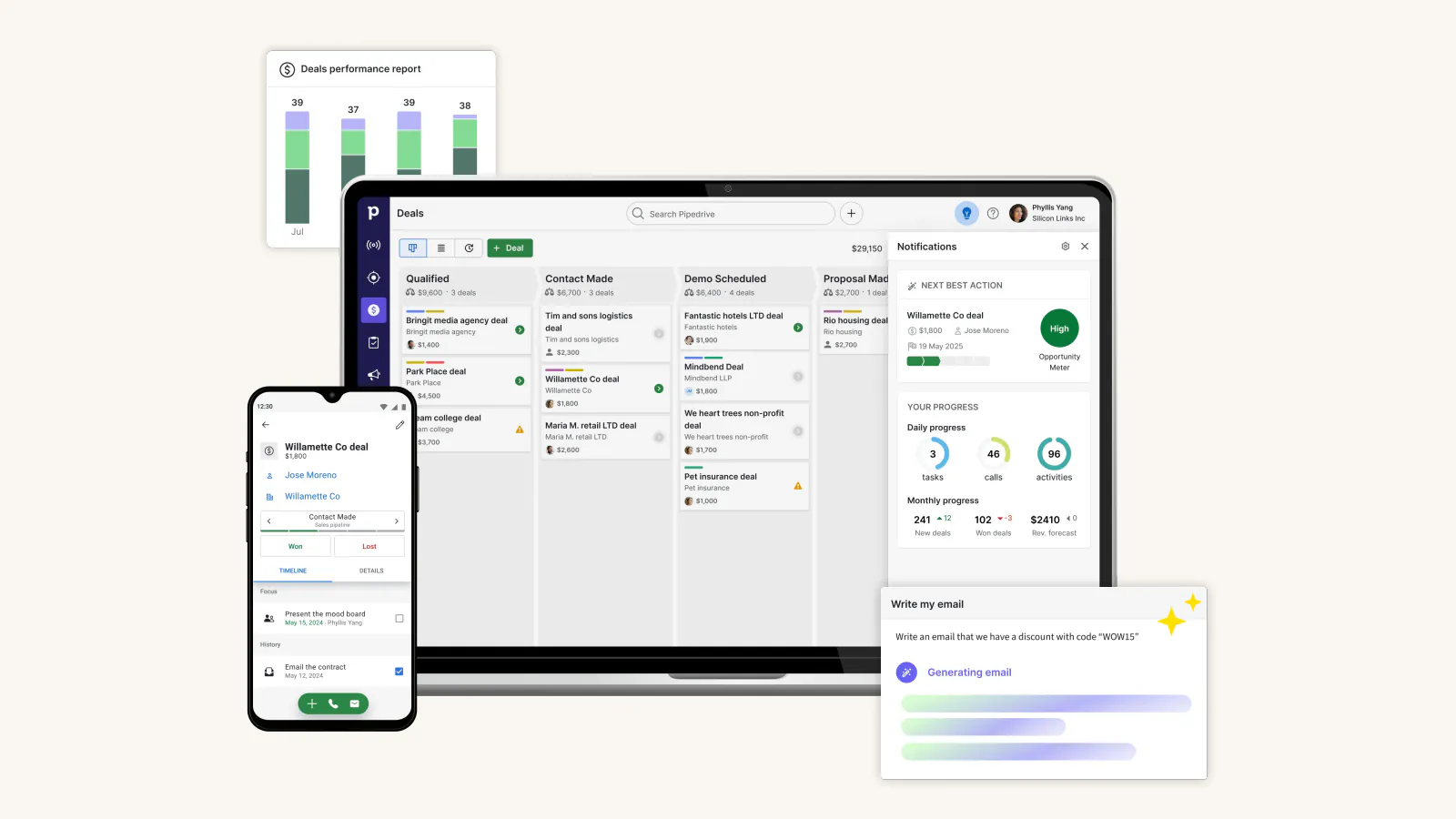
Pipedrive's public site puts a visual sales pipeline at the center of its CRM and describes lead, deal and automation workflows. It is worth testing when the startup already has enough active conversations that deals vanish between stages. Its public site advertises a trial; check the live trial terms and plan features because they can change.
In a trial, create the same three to five representative opportunities and agree on stage definitions before dragging cards around. For each opportunity, record a buyer decision, next action, owner and date. Then inspect a stage view with a teammate: does the board reveal stalled work, or merely make a messy process look tidy? If a stage cannot be defined in a sentence, simplify the process before adding automation.
The image here is Pipedrive's public marketing illustration, captured September 25, 2026. It is an example of the interface, not independent evidence that the product increased sales. See the current Pipedrive product page for live terms.
Attio
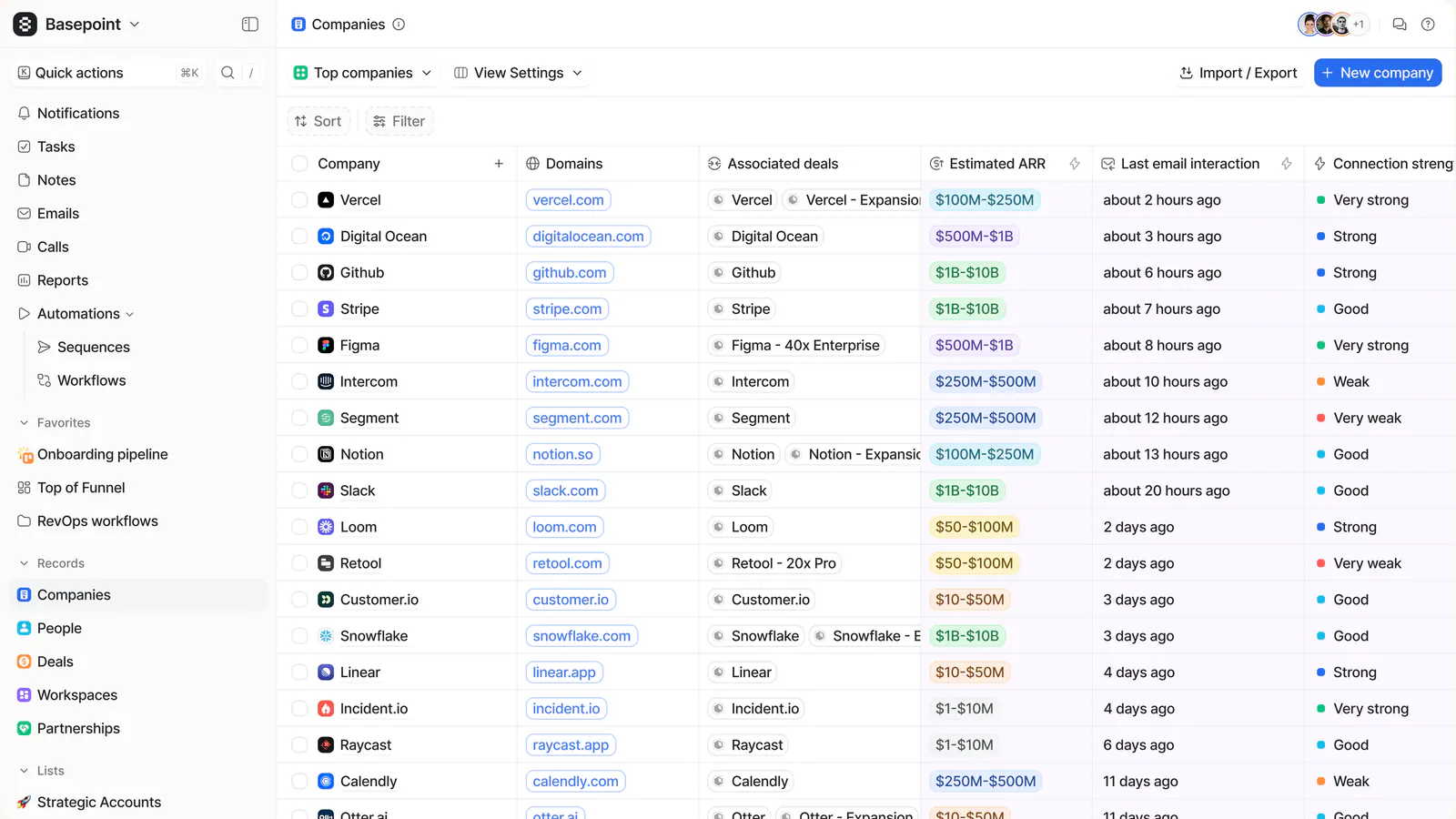
Attio's startup CRM page emphasizes customizable company and contact records, views, pipelines and workflows. It is a candidate when the team must describe relationships that do not fit one standard deal board, such as a company with several buyer contacts and parallel partner conversations. Flexibility is useful only when someone will maintain the data model.
Model one actual relationship in a trial: company, people, opportunity, owner and the fields needed for the next decision. Ask a second teammate to find it without coaching. Then change one field and inspect whether the relevant views and handoffs still make sense. If a simple spreadsheet would answer the same question for a very small team, record that as a valid result rather than treating more configuration as progress.
The image here comes from Attio's public startup page, captured September 25, 2026. It shows sample company data on a promotional screen, not actual customer information or a hands-on verification. Review Attio's current startup CRM page for the latest product scope and terms.
Run the same seven-day CRM test
Testing three products with three different tasks produces an unfair comparison. Pick one representative week of work and define a pass condition in advance. For example: “Two people can recover the latest buyer conversation and next owner for every active opportunity in under a minute.” That is a proposed internal criterion, not a performance promise from any vendor.
Do not make a paid commitment from a prettier board or a long feature checklist alone. The useful evidence is whether your team completed its actual follow-up work reliably.
Download the seven-day startup CRM pilot scorecard (CSV). Set the pass condition before comparing tools, run the same fictional or consented sample records in each trial, and fill in observed results, plan limits and export evidence. The sheet is a blank decision aid; it does not imply that we have tested or endorsed any of these vendors.
Create a product draft, review every fact, and choose a free listing with a verified badge or a one-time badge-free listing after review.
See submission options →
Which CRM should your startup test first?
Start with HubSpot if the immediate gap is shared contact history and task ownership and you want to test a free starting option. Start with Pipedrive if the team already manages multiple active deals and needs an explicit pipeline to reveal stalled next steps. Start with Attio if the relationship model is unusual enough that flexible records and views matter more than a standard board. These are starting hypotheses from current public positioning, not claims that any product is objectively best for every startup.
If two candidates pass, choose the one your real team can maintain and leave without losing important data. If none passes, clarify the sales process and run a smaller test. A CRM should support a buyer conversation that already has an owner; it cannot create qualified demand by itself. For the earlier problem of choosing how to reach buyers, see the SaaS marketing channels matrix.
If you build a CRM or another sales tool for founders, submit your software to SEO Directory for review. The current free listing route requires badge verification, while the paid badge-free route still goes through review. Submission does not guarantee approval, ranking, visitors or customers. This comparison does not imply that HubSpot, Pipedrive or Attio is currently listed or endorsed by SEO Directory.
Create a product draft, review every fact, and choose a free listing with a verified badge or a one-time badge-free listing after review.
See submission options →