Marketing tools for startups: choose a lean stack for one campaign

A startup does not need a tool for every marketing channel on day one. It needs a way to explain one offer, reach a specific buyer, respond to interest, and learn what happened. The right marketing tools are the smallest set that makes those steps reliable for one real campaign.
This guide is for a founder who has an offer and wants to decide what software to use next. It compares tool jobs, not untested vendors or feature lists that change every month. You will leave with a shortlist rubric and a seven-day trial. If you have not selected an audience or channel yet, use the SaaS marketing channels decision matrix first. If you need a longer schedule after choosing tools, use the one-page SaaS marketing plan.
Start with one campaign outcome

Write a single sentence: “We want [specific buyer] to do [observable action] after seeing [specific message] through [one channel].” For example, a fictional client-approval startup might want agency owners who search for scattered feedback solutions to start a trial after reading a focused landing page. That is an illustration, not a claim about a real campaign or likely conversion rate.
Then trace the path backward from that action. What must a visitor see to understand the offer? How will a willing prospect leave contact details? Who will follow up? Which source will you record? A tool belongs in the first stack only if it makes one of those steps possible or materially more reliable.
Record the current baseline before buying anything: the number of relevant visits, meaningful signup starts, completed first-use actions and paid customers, each separately. Zero is a valid baseline. Search impressions, site visits and customers answer different questions, so do not combine them into one “growth” number.
Match five marketing jobs to the smallest tool
These are jobs, not five automatic purchases. A working website, email inbox, spreadsheet and analytics setup may cover the first campaign. Buying another system is justified when a documented failure persists after the manual process has an owner. Your sales software stack is a different decision: CRM and sales handoff become important when real buyer conversations need managing, but those features do not replace a clear marketing message.
Create a product draft, review every fact, and choose a free listing with a verified badge or a one-time badge-free listing after review.
See submission options →
Build a shortlist around the campaign, not a vendor list
For each missing job, write two candidates at most. One can be a tool you already own. Do not compare twenty logos before deciding what the campaign requires. Test candidates against the same representative task, such as publishing a page change, recording an opt-in, and finding the resulting event in your measurement view.
Ask these questions while the task is still small:
Mark each candidate pass, uncertain, or fail for the job. Add the person who will maintain it and the date you will decide. An uncertain result is a question to test, not a reason to buy a higher tier.
Copy-ready shortlist card
If the fields are hard to fill, pause the purchase. The issue may be an unclear offer or audience, not missing software.
Run a seven-day tool trial
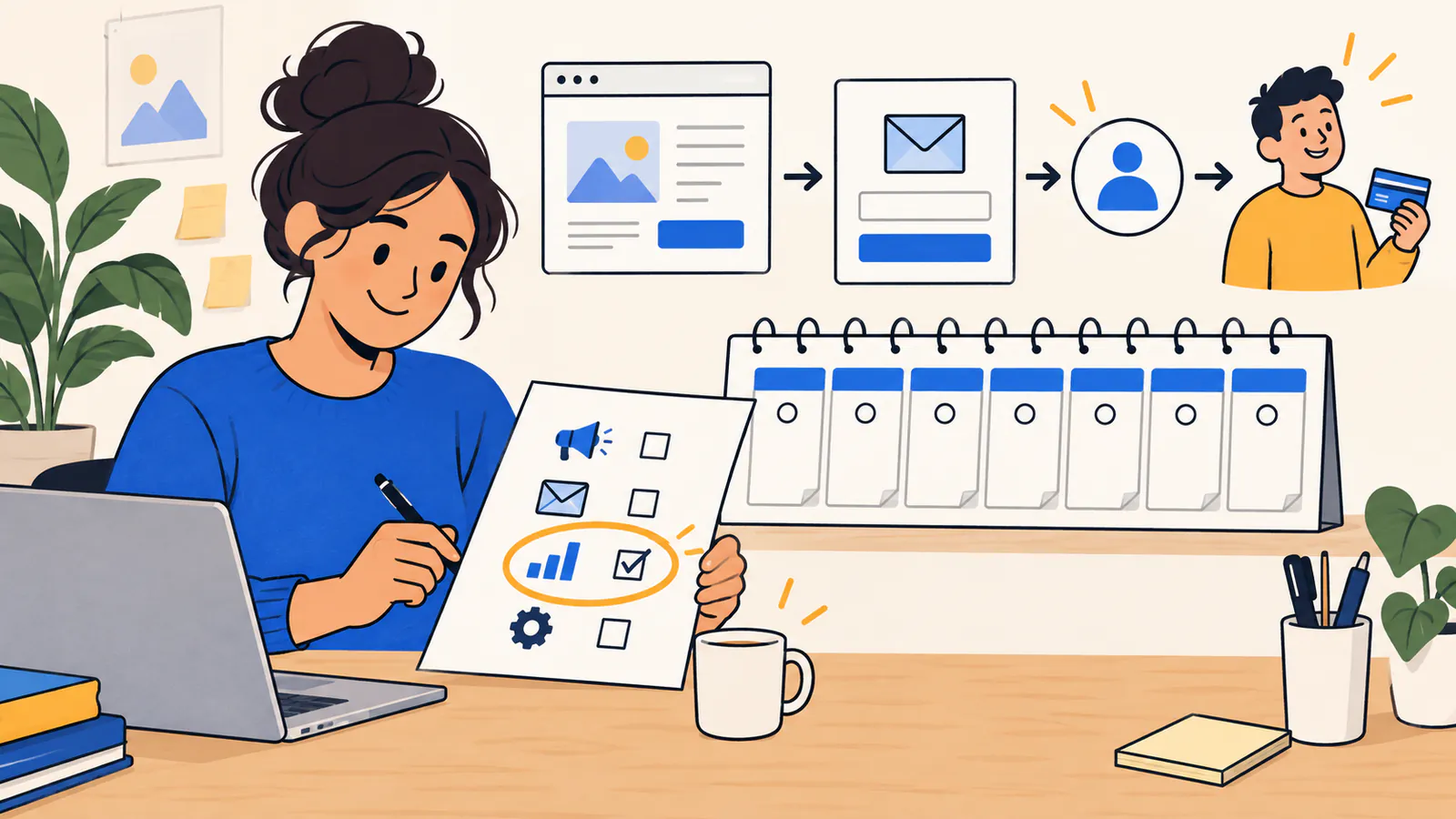
Pick one candidate and one campaign. Before opening the trial, write a pass condition you can observe within a week. For a landing-page tool, the test might be: “A teammate can publish a corrected buyer-specific page, and a first-time visitor can find the primary action.” For a follow-up tool: “Every consenting inquiry has one owner and a response status.” These are workflow tests, not promises of more traffic or revenue.
Use a small amount of representative work. Publish the actual page or content item, use a test inquiry, and walk through the visitor path in a clean session. Check the form response and the record created after it. Record setup time, broken steps and workarounds. If a payment step is involved, use the proper test environment; a checkout click is not a paid order.
At the end of seven days, choose keep, replace, or stop. Keep only if the tool reliably performs the named job at a cost and maintenance level the team can accept. Replace it if the job matters but the candidate fails. Stop if the underlying job was not needed yet. A campaign with too little buyer response may need a better message or channel test before another tool comparison.
Measure the path beyond the tool dashboard
Tool activity can be useful, but it is not the final result. A scheduler may count posts; an email tool may count sends; an analytics tool may count visits. Your campaign still needs to distinguish exposure, visits, engaged inquiries, first useful actions and paid customers. If the first useful action needs its own event tracking, use the seven-day product analytics comparison to define and test it before choosing software.
For a search campaign, Search Console clicks tell you that a Google result was clicked. Site analytics tells you about visits it recorded. A button goal measures interest in a next step. A server-created submission or signup is a completed action. An order marked paid is revenue evidence. Differences between these numbers are normal because they measure different events and use different collection methods. Investigate large gaps rather than treating one number as a substitute for another.
Make a weekly review with one row per channel and landing page. Include the change made, the expected action, the observed action, and the next decision. Do not claim that an article is “working” because it is indexed, or that a directory placement produced a customer because it received views. The 90-day marketing plan template gives you a wider operating cadence once one campaign's measurement path works.
Create a product draft, review every fact, and choose a free listing with a verified badge or a one-time badge-free listing after review.
See submission options →
Where SEO Directory fits
If you are choosing software, you can browse SEO Directory's product search and verify any candidate's current features and terms on its official site. The directory is early and does not yet have a complete catalog; a missing product there is not evidence that it is unsuitable. Use the job rubric above wherever you find candidates.
If you build a marketing tool that helps founders with one of these jobs, you can submit your product to SEO Directory for review. Describe the actual product, link its public website, and choose the current submission path. The free path includes badge verification; the paid badge-free path still requires review. Neither path guarantees approval, rankings, visitors or customers. A truthful listing can help buyers understand what your software does, but the campaign outcomes still need to be measured.
Create a product draft, review every fact, and choose a free listing with a verified badge or a one-time badge-free listing after review.
See submission options →